Select a category
Choose a payload category from the list on the left to learn about Accutrak Group's weighing and measurement solutions.
In-Motion Weighbridges
Road | Open-Pit | Underground
Overview
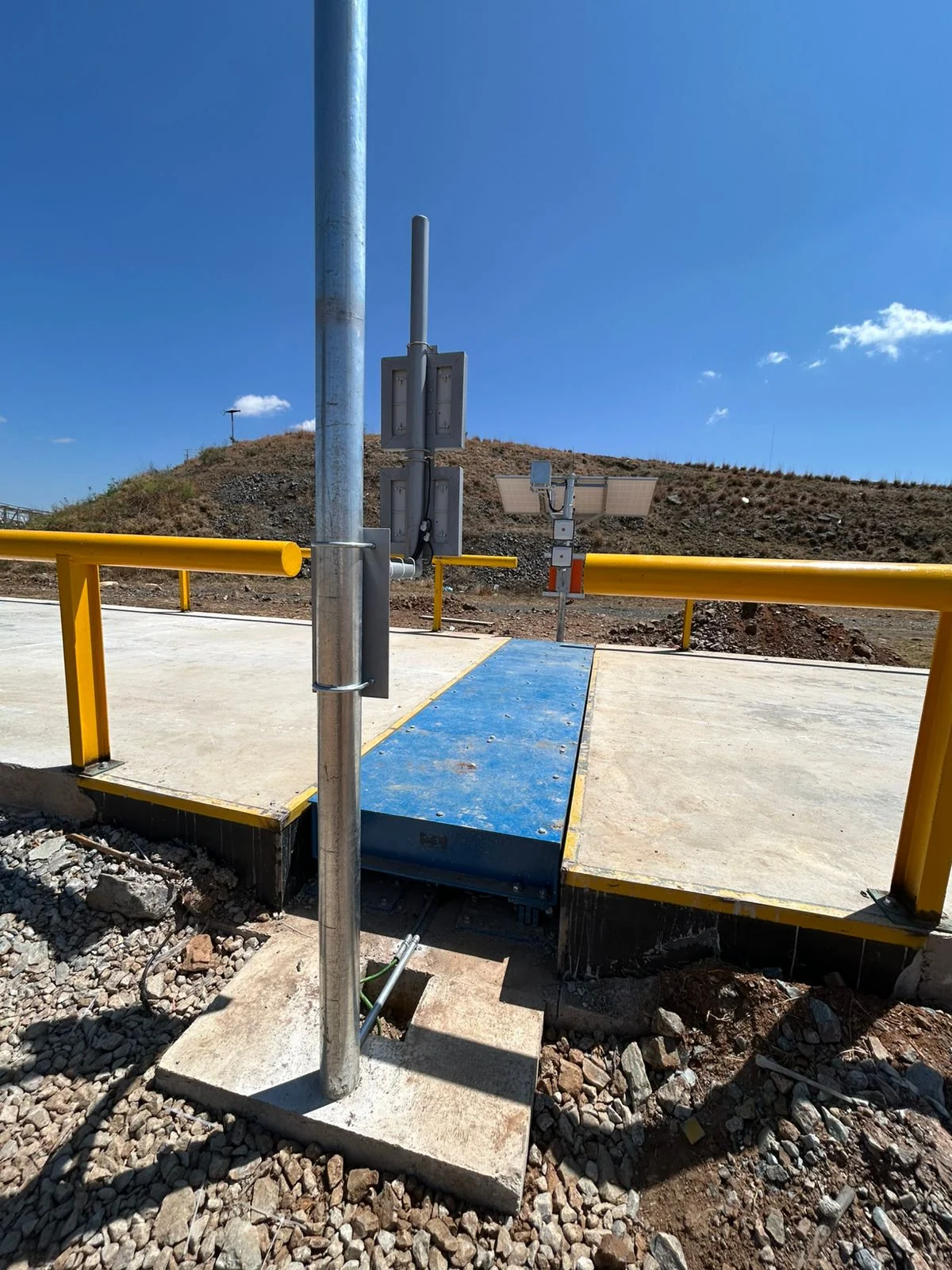
Accurate in-motion weighing with a strong focus on data accessibility. From weighing events to data appearing on screens in less than 10 seconds. Both full and empty weighing events are possible with direction tracking, allowing you to determine delivered mass while accounting for carry-back if needed.
Our weighbridges are fully customisable to meet any operation's requirements and are fully integrable with our fleet monitoring products, enabling exact tonnages to be linked to unique trip IDs in the production monitoring software.
Key Features
- Accurate, timestamped tonnage measurements captured at operating speed
- Bi-directional weighing with both full and empty measurements
- Data available on screens within 10 seconds of a weighing event
- Full integration with Trucktrak, Minegaze and Roadgaze fleet monitoring platforms
Applications
Weighbridges are installed at source and destination facilities for road haulage operations, at pit exits for open-pit fleet management, and at ore pass tips and shaft landings in underground mines. Each installation is scoped to the specific constraints of the site - pad dimensions, approach speed, vehicle classification and reporting requirements.
Full & Empty Weighing in Practice
The charts below illustrate the consistency and reliability of full and empty weighing events across real installations. The stability of the empty (blue) readings is particularly significant - it demonstrates the system's ability to detect and compensate for carry-back, ensuring that delivered payload is calculated accurately on every trip.
Underground - Shaft Weighbridge
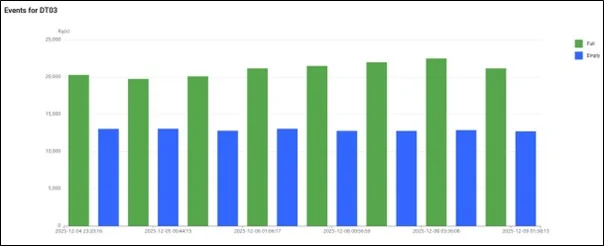
The minor variance in the empty (blue) measurements reflects carry-back detection - the system compensates automatically, improving overall payload accuracy.
Surface - 7-Axle Truck
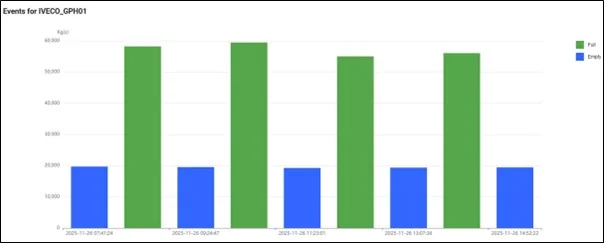
Consistent empty readings confirm reliable baseline measurement across a full production shift for a 7-axle surface truck.
From weighing event to screen in under 10 seconds - with full and empty direction tracking, every tonne is accounted for and linked directly to the trip that carried it.
Volumetric Scanning
Open-Pit | Road | Stockpile | Quarry | Underground
Overview
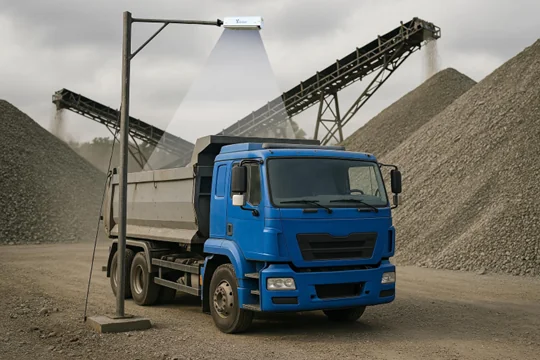
Weighbridges provide reliable mass measurement but do not capture volumetric or geometric load data. Factors such as moisture, density variation and compaction can cause discrepancies between actual material volume hauled and the volume inferred from weight alone. The Load Volume Scanner (LVS) addresses this gap - delivering real-time, contactless, in-motion load volume data for every truck movement, complementing rather than replacing weighbridge records.
How It Works
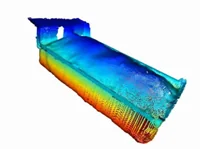
Each truck is registered against its fleet number or RFID/LPR identifier. The truck drives through the scan portal at normal operating speed - no stopping required. The scanning head, using stereo vision with LiDAR fusion, captures a full 3D point cloud of the load. AI-driven algorithms isolate the payload geometry, calculate loaded volume and derive fill percentage. A timestamped, tamper-proof ticket is generated per load and stored on the cloud platform in real time.
Data Outputs
- Load Volume - volumetric quantity per truck, per shift and per period
- Fill Percentage - hopper capacity utilised, identifying underloading
- 3D Load Profile - colour-coded point cloud stored against truck ID and timestamp
- Carryback Detection - residual material remaining in the hopper between loads
- Load Geometry - material distribution pattern and geometry analysis
- Real-Time Reporting - live dashboard with exportable reports and API export
Key Specifications
- Accuracy greater than 98% volumetric
- IP65 rated - dust, rain and outdoor operation
- Solar powered - no mains connection required
- No daily calibration required; remote OTA software updates
- Integrable with existing weighbridge records to enhance production reporting
Where a weighbridge measures mass, the LVS measures geometry. Together they provide a complete picture of every load - what it weighed, what it looked like, and how full the truck actually was.
Trucks Onboard Weighing
Open-Pit | Underground
Overview
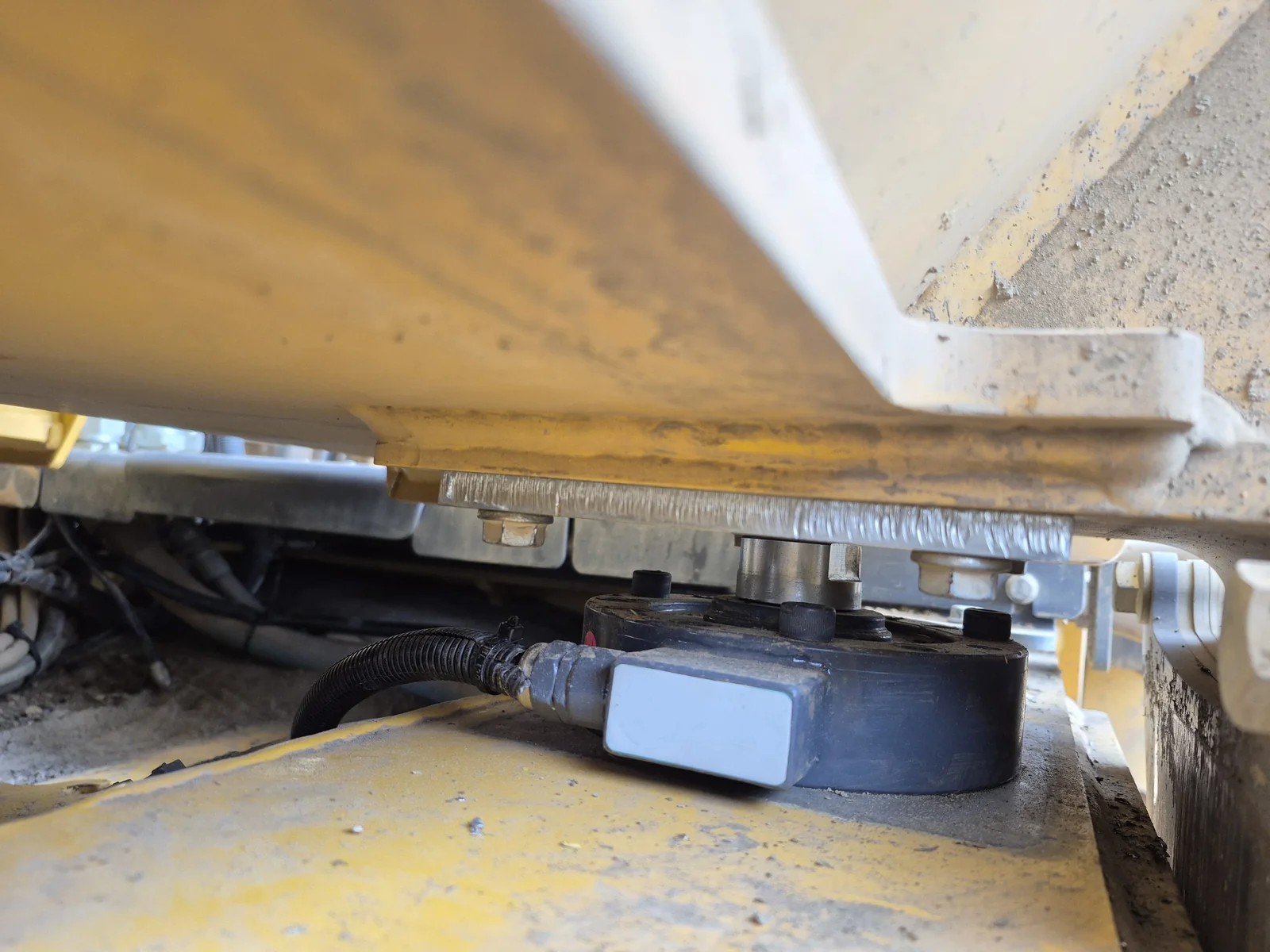
Accurate onboard weighing using robust load cells and load pins installed directly on dump trucks and haul trucks, tailored to the specific chassis and body configuration of each vehicle. The system provides real-time payload data to operators and production teams, enabling improved loading efficiency and reduced overloading risk without requiring the truck to stop at a fixed weighpoint.
Key Features
- Real-time payload display for operators at the point of loading
- Overload warnings to protect vehicle suspension and haul road infrastructure
- Per-trip payload records linked to the production monitoring system
- Compatible with CAT, Komatsu, Bell, Liebherr and other OEM platforms
- Ruggedised for extreme temperature, vibration and dust environments
- Fully integrable with Trucktrak, Minegaze and Roadgaze
Applications
Truck onboard weighing is deployed where fixed infrastructure cannot cover every loading point - for example, multi-face open-pit operations where trucks load at different excavators throughout the shift, or underground operations where trucks travel from multiple ore sources to a single tipping point. The system ensures payload data is captured at the vehicle regardless of where loading takes place.
Every tonne tracked and linked to production performance - regardless of where in the operation the loading took place.
Conveyor Belt Scales
Underground | Bord & Pillar
Overview
Conveyor belt scales provide continuous, highly accurate measurement of material flow at fixed points in the ore handling chain. In many environments they are the most reliable and lowest-maintenance payload measurement tool available - particularly where vehicle-mounted systems face practical limitations. The tonnes measured by the belt scale are pulled through to Trucktrak, enabling shift-level production reporting without relying on individual trip payload accuracy.
Bord & Pillar: The Primary Application
Belt scales are particularly well suited to bord and pillar mining, where they solve a measurement problem that neither onboard weighing nor scanning can reliably address.
In a bord and pillar section, LHDs tip into a feeder at the end of the section, which feeds a conveyor belt. The tip point is fixed, and everything that goes into the feeder passes over the belt scale - making it the most natural and accurate point to measure total section output. Onboard weighing on LHDs is seldom reliable in this environment: the machines operate under high vibration, in confined headings, and across highly variable loading conditions that affect sensor accuracy. Scanners and in-motion weighbridges are equally impractical - the tip point moves with the section advance, making any fixed scanning or weighbridge infrastructure unworkable.
Shift Bucket Factors by Strike
The belt scale provides verified section tonnes per shift. Combined with the trip count from Trucktrak - which records every LHD tip event - the system calculates a shift bucket factor per strike: total tonnes from the belt scale divided by the number of tips recorded from that heading.
This bucket factor is updated each shift and made visible in Trucktrak alongside trip counts and production totals. A bucket factor that is consistently low against the expected value immediately identifies underloading - whether due to operator behaviour, geology, or heading conditions. A rising factor can indicate overloading or material density changes. The data does not require unique trip-level tonnage to be useful: the shift total from the belt scale is the accurate foundation, and the trip count provides the denominator.
Shift bucket factor = belt scale tonnes ÷ number of production trips (by strike)
Under or overloading is immediately visible - per strike, per shift - without requiring onboard weighing on the LHD.
Other Applications
Beyond bord and pillar, belt scales are used at ore pass discharge points, silo exits, shaft skip hoisting measurement, transfer stations and plant feed systems. In any application where a fixed conveyor handles the bulk flow, the belt scale provides the most accurate and lowest-maintenance measurement point in the system - and its output integrates directly into the same production monitoring environment as fleet and trip data.
In bord and pillar mining, the belt scale is often the only reliable measurement tool. Paired with Trucktrak trip counts, it delivers shift bucket factors by strike - making underloading visible without any hardware on the LHD.
Related products: Trucktrak
Integration with Trucktrak, Minegaze & Roadgaze
All environments | Unified data platform
Overview
All Accutrak Group payload measurement products - in-motion weighbridges, volumetric scanning, onboard weighing and conveyor belt scales - are designed to integrate directly with our fleet monitoring platforms: Trucktrak, Minegaze and Roadgaze. Rather than treating weighing as a standalone activity, integration links every tonne to the specific trip, vehicle and operator that carried it.
What Integration Enables
- Trip-linked payload records - each weighing event is automatically matched to the unique trip ID of the vehicle that triggered it, creating a complete load-and-route record for every cycle.
- Source-to-destination reconciliation - where weighbridges are installed at both ends of a haulage route, the system compares source and destination weights per trip and flags discrepancies automatically.
- Live production dashboards - payload data feeds directly into shift-level dashboards alongside trip counts, utilisation and location data, giving a single, unified view of operation performance.
- Overload and underload alerts - onboard weighing data triggers alerts when payload thresholds are exceeded or consistently missed, enabling intervention within the shift.
- Historical reporting and export - all weighing records are stored with full metadata and exportable for mine planning, reconciliation and compliance purposes.
How It Works
Each payload device communicates with the fleet monitoring server over the site's network or cellular infrastructure. When a vehicle crosses a weighbridge, completes a loading cycle or tips a bucket, the event is timestamped, assigned to the correct trip record in the fleet system, and made visible in the monitoring dashboard within seconds. No manual data capture is required.
In operations where multiple payload measurement methods are deployed simultaneously - for example, belt scales at ore passes combined with onboard weighing on LHDs and weighbridges at surface - all data streams converge in a single environment, enabling full ore path visibility from extraction to processing.
Every weighing event - whether from a belt scale, a weighbridge or an onboard system - is automatically linked to the trip that generated it. Payload data and fleet data become one record.